WHERE ARE THE DEAD?
Sitting across from me in my office was an older middle-aged man who had just read my draft commentary on the Book of Revelation. He had come from Queensland to visit friends in Tasmania and while in the neighbourhood, dropped in to see me to have chat and get a later edition of my book. He asked a lot of theoretical questions and we discussed the implications of what we discussed. Not until he returned to Queensland did I get an email regarding the chapter on the Resurrection. It was at this point that he confided in me that he was in the advanced stages of cancer and that his query was far more than theoretical.
For some the question of where are the dead is indeed far more than just an exercise in theological speculation...
 "Jesus unites, doctrine divides!" I wonder how many people who espouse this anti-doctrinal statement realise that it is ironically a doctrinal statement? The fact might actually be that this statement is exactly wrong. The true identity of Jesus has been dividing people for two millennia! And various doctrinal positions have been uniting people for nearly that long as well. When it comes to controversial doctrinal positions that Christians feel strongly about, we may never come to complete agreement or resolve every Scriptural difficulty, but at the least we can become familiar with the various positions held and test them against Scripture, history, experience, and logic. By doing this we may not necessarily conclude the same things, but at least we can be better positioned to defend our particular doctrines and know why we believe what we believe. To do this requires "Positive Exegesis" and "Negative Exegesis". The latter concludes what the Scriptures are not saying, while the former concludes what the Scriptures are saying. All Bible students should be good exegetes. This demands that the student knows how to do positive and negative exegesis. That is, when interpretting a text we need to determine what the text doesn't say and explore the possibilities of what it could be saying. Using this same principle of both Positive and Negative Exegesis we can at least dispense with bad doctrines (those doctrines that can not be supported from the Scriptures or can even be disproved from Scripture). We may not be able to be conclusive about what is the proper Biblical position on all issues. In those instances where there is reasonable disagreement we should at least be able to make a reasonable case for our doctrinal position and understand the contrary positions of others. "Jesus unites, doctrine divides!" I wonder how many people who espouse this anti-doctrinal statement realise that it is ironically a doctrinal statement? The fact might actually be that this statement is exactly wrong. The true identity of Jesus has been dividing people for two millennia! And various doctrinal positions have been uniting people for nearly that long as well. When it comes to controversial doctrinal positions that Christians feel strongly about, we may never come to complete agreement or resolve every Scriptural difficulty, but at the least we can become familiar with the various positions held and test them against Scripture, history, experience, and logic. By doing this we may not necessarily conclude the same things, but at least we can be better positioned to defend our particular doctrines and know why we believe what we believe. To do this requires "Positive Exegesis" and "Negative Exegesis". The latter concludes what the Scriptures are not saying, while the former concludes what the Scriptures are saying. All Bible students should be good exegetes. This demands that the student knows how to do positive and negative exegesis. That is, when interpretting a text we need to determine what the text doesn't say and explore the possibilities of what it could be saying. Using this same principle of both Positive and Negative Exegesis we can at least dispense with bad doctrines (those doctrines that can not be supported from the Scriptures or can even be disproved from Scripture). We may not be able to be conclusive about what is the proper Biblical position on all issues. In those instances where there is reasonable disagreement we should at least be able to make a reasonable case for our doctrinal position and understand the contrary positions of others.
WHERE ARE THE DEAD?
Despite the advances in medical science, the death-rate is still 1:1. "What man can live and never see death?" asked the Psalmist (Ps. 89:48a). To the ancients this was only half of the inevitable destiny of people. The other half of the given was stated by the same Psalmist in the same verse-
"Who can deliver his soul from Sheol?"
(Psalm 89:48b)
The ancients believed that death was merely a change of location for the soul of a person. The place of the dead was called "Sheol". When Jacob thought his son Joseph was dead: "All his sons and all his daughters rose up to comfort him, but he refused to be comforted and said, “No, I shall go down to Sheol to my son, mourning.” Thus his father wept for him." (Gen. 37:35 ). When the judgment of God came upon Korah and his rebellion:
"So they and all that belonged to them went down alive into Sheol, and the earth closed over them, and they perished from the midst of the assembly." (Num. 16:33).
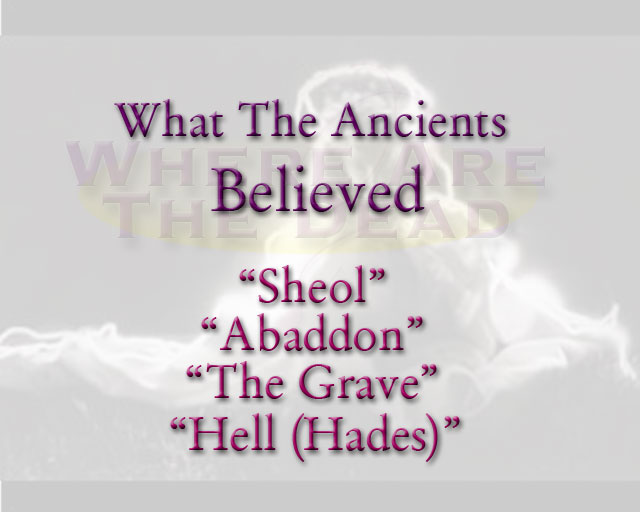
Sheol was variously referred to with other names depending on the literary genre. These included "Abaddon" (Sheol and Abaddon lie open before the LORD; how much more the hearts of the children of man! Prov. 15:11); "the grave" (Is your steadfast love declared in the grave,
or your faithfulness in Abaddon? Psalm 88:11); "Hell" (The sorrows of hell compassed me about; the snares of death prevented me. 2Samuel 22:6 KJV). These Old Testament passages consistently teach that the dead did not go to their ultimate eternal destiny. That is, during the Old Covenant Age the righteous did not go to heaven, nor did the wicked go to eternal damnation. This perhaps gives us some understanding into the ideological origins of "soul sleep" and "pergatory".
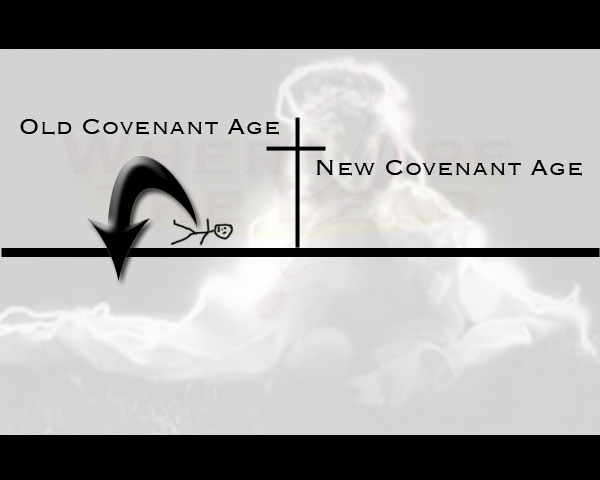
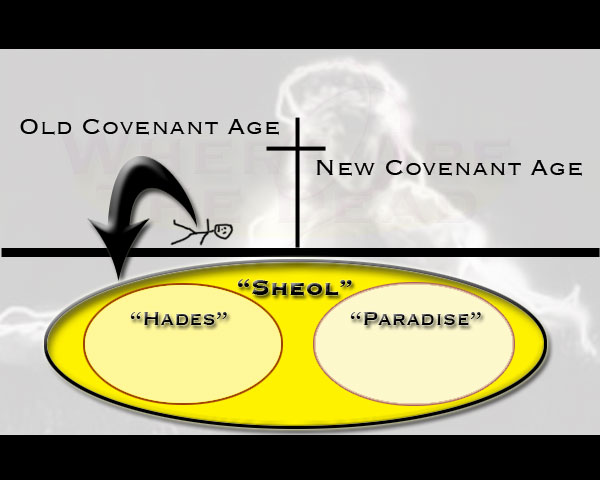
The New Testament somewhat enlightens this when it introduces us to the revelation that Sheol has two compartments: Hades and Paradise. It also makes two overt claims that were previously just assumed in the Old Covenant. The first is that death is not the end, it is merely a "separation".
For as the body without the spirit is dead, so faith without works is dead also.
(James 2:26)
When a person physically dies their spirit is separated from their bodies. Their lifeless body decays while their spirit lives on. What many people who have come back from the dead have testified about seeing a bright light and tunnel seems to be in agreement with what the New Testament says about angels carrying the souls of the dead to the place of the dead.
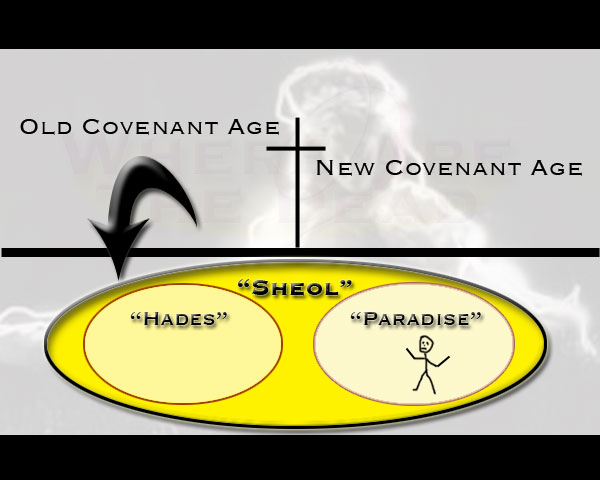
The poor man died and was carried by the angels to Abraham’s side. The rich man also died and was buried
(Luke 16:22)
The second overt claim of the New Testament is that all dead people will one day be resurrected- physically. But I will deal with this revelation in a moment. For now, let's examine what the Scripture reveals about the place of the dead as we seen thus far-
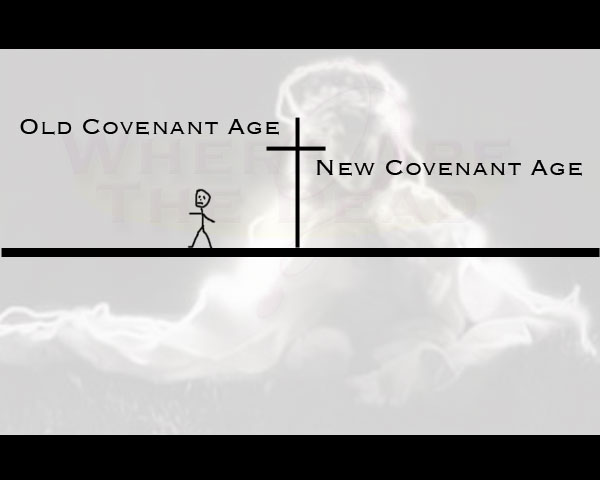
The story that Christ told in Luke 16 of the rich man and Lazarus is very revealing about the destiny of the dead. He described the two compartments of Sheol separated by a great chasm. The question that we should ask and explore is whether this is still the case since the Cross, or whether the New Covenant has made any difference to the destiny of the dead. What might surprise people is the difficulty in identifying exactly when the Old Covenant actually ended. How many people would consider John the Baptist a New Covenant prophet because they have assumed that the Old Covenant ended with the close of the Book of Malachi? How many people assume that the commencement of the New Covenant automatically cancelled the Old Covenant when the Book of Acts records the apostles continuing to worship in the Temple and partake of its ceremonies?
Then Paul took the men, and the next day he purified himself along with them and went into the temple, giving notice when the days of purification would be fulfilled and the offering presented for each one of them.
Acts 21:26 (Note also- Acts 2:46; 3:1; 5:21, 25, 42)
Here we have the author to the Galatians partaking in Old Covenant ceremonies some twenty or more years after Calvary! When the disciples asked Christ about the end of the Old Covenant Age, He told them in Matthew 24 that it would coincide with the destruction of the Temple-
But he answered them, “You see all these, do you not? Truly, I say to you, there will not be left here one stone upon another that will not be thrown down.” As he sat on the Mount of Olives, the disciples came to him privately, saying, “Tell us, when will these things be, and what will be the sign of your coming and of the close of the age?”
Matthew 24:2-3
The writer to the Hebrews stated that the New Covenant had made the Old Covenant obsolete, but that it was yet to be done away with. This suggests a temporary overlap of Old and New Covenants-
In speaking of a new covenant, he makes the first one obsolete. And what is becoming obsolete and growing old is ready to vanish away.
Hebrews 8:13
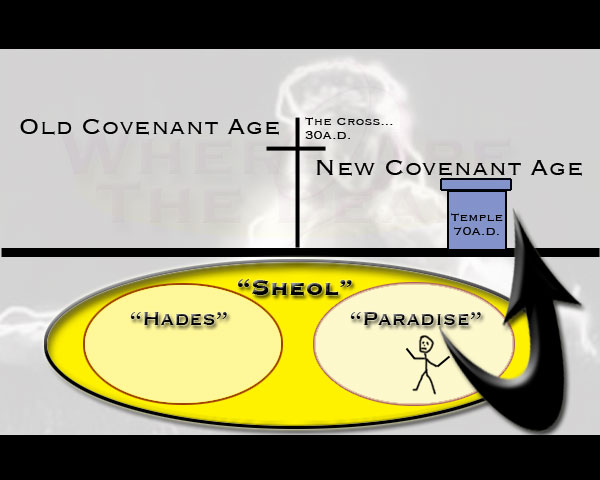
In Revelation 6 we are shown a glimpse of those who had died during this duality of Covenants. Following on the heels of the Four Horsemen (the rider of the white horse= Caesar Augustus; the rider of the red horse= Caesar Tiberius; the rider of the black horse= Caesar Caligula; the rider of the pale horse= Caesar Claudius, who coincides with famine according to Revelation 6:8 and is noted as being fulfilled in Acts 11:28 And one of them named Agabus stood up and foretold by the Spirit that there would be a great famine over all the world (this took place in the days of Claudius); and then the fifth seal coincides with the martrydom of Christians, Rev. 6:9). These deceased believers are then given a robe of white (which we might understand as a temporary heavenly body) and told that their wait "under the altar" would not be for much longer, before (presumably) they were to enjoy God's presence in heaven with their temporary heavenly bodies as soon as the Old Covenant was wound up.
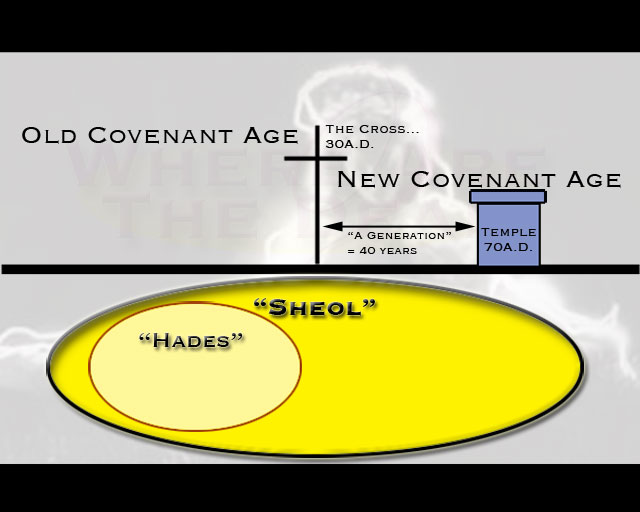
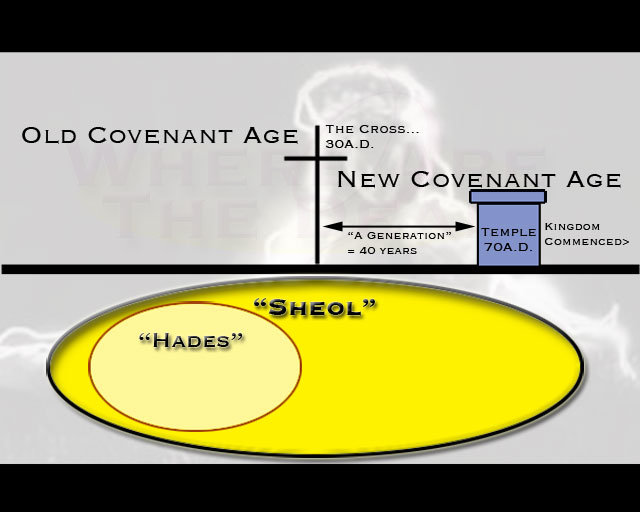
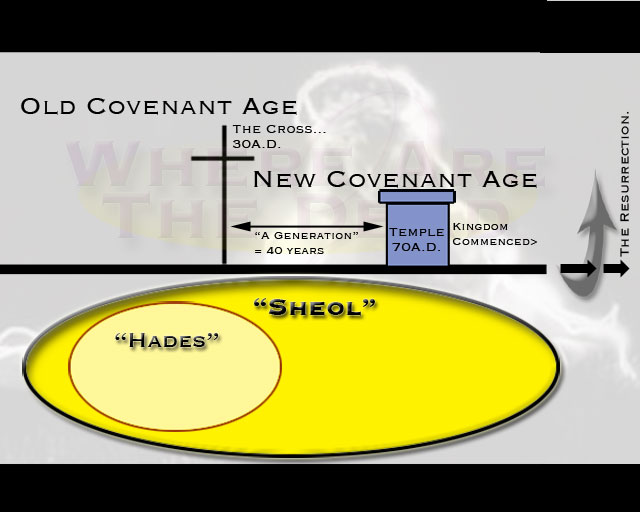
With the close of the Old Covenant came the close of Paradise component of Sheol. Believers who died in Christ from that point could enjoy what Paul the apostle looked forward to even prior to the resurrection, that he would "be with Christ".
I am hard pressed between the two. My desire is to depart and be with Christ, for that is far better.
Philippians 1:23
Therefore, the issue is not really about the location of the deceased believer, but the relationship of the deceased believer with Christ, forever. On "the last day", the great final eschaton, will come the Resurrection and judgment of everyone.
For this is the will of my Father, that everyone who looks on the Son and believes in him should have eternal life, and I will raise him up on the last day.”
John 6:40
 | | 
Therefore, for those who have died in Christ we can be comforted that they are with the Lord. And perhaps of more comfort is the knowledge that our devotion to Christ in this life is not in vain in the next. What awaits the believer and the rejector of God, heaven and hell, is the topic of the next installment.
© Dr. Andrew Corbett, September 25th 2006, Legana, Tasmania, Australia (αω)

© April 30th 2009, Dr. Andrew Corbett, writing from Broadbeach, Queensland, Australia
Subscribe to the free weekly teaching Podcast by Dr Andrew Corbett, delivered directly to your computer
|