

Finding Truth Matters, home > articles > theology > THE THREE PHASES OF THE IMAGO DEI AND ITS CONNECTION TO THE ORIGIN AND DESTINY OF SATAN
THE THREE PHASES OF THE IMAGO DEI AND ITS CONNECTION TO THE ORIGIN AND DESTINY OF SATAN
by Dr. Andrew Corbett, 10 February 2022 from Legana, Tasmania; updated 16th July 2026 from Melbourne, Victoria
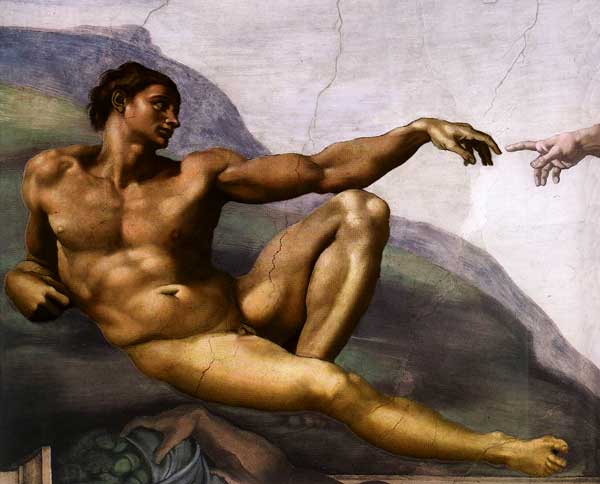 Brian Williams, a highly regarded Lewisian scholar, states, “Narnia might be more real than we think” because of its creative and ‘sacramental’ imagery to describe our fallen world (1). He states, however, that Lewis’s earlier work, Perelandra, offers even greater theological insights into the Creator’s intention for gendering the original imago Dei. Perelandra is set on Venus to depict a re-enactment of the creation of the first man and woman. Unlike earth’s first woman and man who yielded to the tempter, the Venusian First Lady does not. While our redemption was won by the true imago Dei (and will culminate in our exultation) in Perelandra there is no need for redemption! It culminates with the Venusian man and woman being rewarded for overcoming evil by being exulted. Thus, Lewis has shown that the imago Dei necessarily involved the creation of man and woman and it is in the appearing of the perfect imago Dei (Christ, 2 Cor. 4:4) that evil in our world will be forever vanquished (Heb. 2:14).
Meeting the Perfect Woman
Perelandra was published over a decade earlier than the ’Chronicles and was part of Lewis’s foray into pre-evangelism (2). In its prequel, Out of the Silent Planet, we were introduced to Elwin Ransom (1938) and the wicked physicist, Professor Weston. In Perelandra, ‘Maleldil’ (Yahweh) had just created the first Venusian man (Tor) and woman (Tinidril). Maleldil then summoned Dr. Ransom to Perelandra to meet the ‘Green Lady’ (Tinidril) (3). Upon meeting her (whom he considered being like our ‘Eve’) he marvelled at her innocence and radiance. It soon became obvious she enjoyed extraordinary intimacy with Maleldil in a pristine world. From a distance she had originally mistaken Ransom for her husband whom she referred to as the king and whom Ransom was keen to meet.
But then their serenity was interrupted. A stranger arrived – Prof. Weston. He had been entangled in the occult and was now personified evil. His one sinister intent was to deceive and sever the first Lady from Maleldil. The echoes of the Edenic serpent drama are obvious.
The Unique Imago Dei (Image of God)
Theologians representing their various faith traditions define the imago Dei differently, as Samples points out (4). Rana and Ross have also written about the unique functionality of the imago Dei (5). While Heiser sees that the imago Dei was about the status of humans, he seems to miss the point about its uniqueness when he states – angels also bear the same imago Dei (6, 7). Mankind’s exceptionalism as the imago Dei is affirmed by all Christian traditions. But relatively little consideration has been offered about why it was only after the creation of the woman that the imago Dei was declared.
The Mysterious Origin of the Devil
In Lewis’s Perelandra, Weston mimics the serpent of Eden. In both the biblical account and in Perelandra the evil-one appears just after the woman had been created, and in both accounts, he is determined to corrupt the woman (rather than the man). Lewis’s account also shadows the biblical narrative but gives some background to the origin of its evil-one in its prequel. The biblical account however, only reveals the identity of the Edenic evil-one in Revelation 12:9 as “the devil or Satan”; and only gives two possible allusions to aspects of Satan’s origin: Isaiah 14:13-15 and Ezekiel 28:13-15, but not its cause. However, a careful reading of Genesis 1-3 harmonised with an ancient Jewish tradition does.
The Declaration of the Imago Dei in Genesis 1-3
In Hebrew narrative style, Genesis 1 gives ‘the executive summary’ of creation (8) while Genesis 2 gives specific details about the Day 6 creation of mankind. Harmonising these two accounts we observe two things about the imago Dei. Genesis 1:27 states, “So God created mankind in his own image, in the image of God he created them; male and female he created them.” This declaration of bearing the imago Dei was curiously not given in the more detailed account of Genesis 2. However, presumably, in Genesis 2 when God created the man (Hebrew, ’Adām), he was the imago Dei as noted by Ross (9). Yet based on the sequence in Genesis 1, the imago Dei was not yet fully expressed until God had created the woman (Heb. Ish’shah – note: she was not named “Eve” until after the Fall, Gen. 3:20).
Before Ish’shah was created, ’Adām was tasked with examining and naming the animals of Mesopotamic Eden (10). Ross, perhaps being overly conservative, has calculated the time required to complete this task as “a year or two” (11). (We might as easily have estimated this time-frame to have been considerably more.) But why was it that the devil only appeared after Ish’shah was created? After all, the Tempter had at least a year to carry out his wicked scheme against God’s initial image bearer, ’Adām. When we consider the intertestamental Pseudepigrapha (12) we might be able to understand why.
Problems with the Popularised Explanation about the Origin of Satan
The origin of Satan is popularly depicted as one of the chief angels who rebelled against Yahweh and secōnded one third of heaven’s angels – who then became ‘demons’. Heiser notes that Revelation 12:3-4a is an inadequate support for this theory because it describes events after Christ’s incarnation and ascension (13). This clearly cannot account for Satan’s origin.
Jane Scharl (Anselm Society) refers to the traditions within the Pseudepigrapha which state that it was only when Yahweh created the woman that a chief angel became envious because there was now a creature ‘more powerful than him’ who was uniquely like God since she possessed an attribute that no other creature — including ’Adām or any angel — possessed: the ability to create an immortal soul ex-nihilo (sexually wedded to a human man) (14). Texts such as Wisdom of Solomon 2:24 and Life of Adam and Eve 12–14 describe Satan’s fall as being prompted by such envy.
Even if we only took the biblical data that mankind was declared to be the imago Dei after the woman was created, we recognise that it is only then that Satan appears. Scharl references the Rabbinic traditions that Satan held deep animus for the woman and he now feels this toward women in general. Indeed, the Bible gives accounts of the devil’s assaults against women and Yahweh’s redemption of them. Five of them played a role in the lineage of the Christ as evidenced by their ‘Honour Role’ in Matthew 1 but especially by Yahweh choosing a woman to bear the ultimate Imago Dei (2Cor. 4:4; Heb. 1:3). Indeed Christ’s incarnation was a revelation of the third phase of the imago Dei; and, while the origin of Satan was linked to the creation of the imago Dei’s ‘second phase’, his destiny and doom has been made certain by the appearing and victory of the true Imago Dei, Jesus Christ (1John 3:8; Rev. 20:10) as prophesied in Genesis 3:15. Who knows? Perhaps Perelandra may become more real than we think.
ENDNOTES
- Williams, Brian M. 2021. C. S. Lewis Pre-Evangelism For A Post- Christian World. Why Narnia might be more real than we think. Cambridge, OH: Christian Publishing House.
- Williams, p. 190.
- Lewis, Clive S. 2005 (1943). Perelandra. Voyage to Venus. London: HarperCollins. p. 61
- Samples, Kenneth R. 2012. 7 Truths That Changed The World. Grand Rapids, MI. p. 168.
- Ross, Hugh N. and Rana Fazale. 2015. Who was Adam? Covina, CA: RTB Press. p. 332.
- Heiser, Michael S. 2018. Angels: What the Bible Really Says about God’s Heavenly Host. Bellingham, WA: Lexham Press. p. 31.
- For more discussion about the imago Dei, refer to 7 Truths That Changed The World, pages 163-187.
- Ross, Hugh N. 2001 (1998). The Genesis Question. Colorado Springs, CO: Navpress. p. 55.
- Ross. 2001 (1998). p. 59.
- Ross, Hugh N. 2014. Navigating Genesis – A scientist’s journey through Genesis 1-11. Covina, CA: RTB Press. p. 99, Figure 10.2.
- Ross. 2014. p. 105
- The Pseudepigrapha originated in the intertestamental period and informed early Jewish Christian thought including some writers of the New Testament. http://bombaxo.com/new-testament-allusions-to-apocrypha-and-pseudepigrapha/
- Heiser, Michael S. 2020.Demons: What the Bible Really Says about the Powers of Darkness. Bellingham, WA: Lexham Press. p. 244.
- Morris, Shane, and Scharl Jane. 2021. Embodied Sainthood: Gender and Dragon-Slaying. Colson Centre. https://www.colsoncenter.org/upstream-podcast/
© 2022, 2026 Dr. Andrew Corbett

















-

AUTHENTIC APOSTOLIC LEADERSHIP – Biblical Structure for the Church Today
$18.95 -

CHRISTIANISED WITCHCRAFT – Getting things wrong in Jesus’ Name, eBook
$7.95 -
Sale!

THE MOST EMBARRASSING BOOK IN THE BIBLE, Understanding the Book of Revelation – eBook
Original price was: $15.95.$9.95Current price is: $9.95. -
Sale!

THE MOST EMBARRASSING VERSE IN THE BIBLE (eBook)
Original price was: $9.95.$5.95Current price is: $5.95.

© Finding Truth Matters - Public Policy - Ethics - Cultural Commentary - Philosophical-Biblical-Theology - Apologetics
0 Comments